

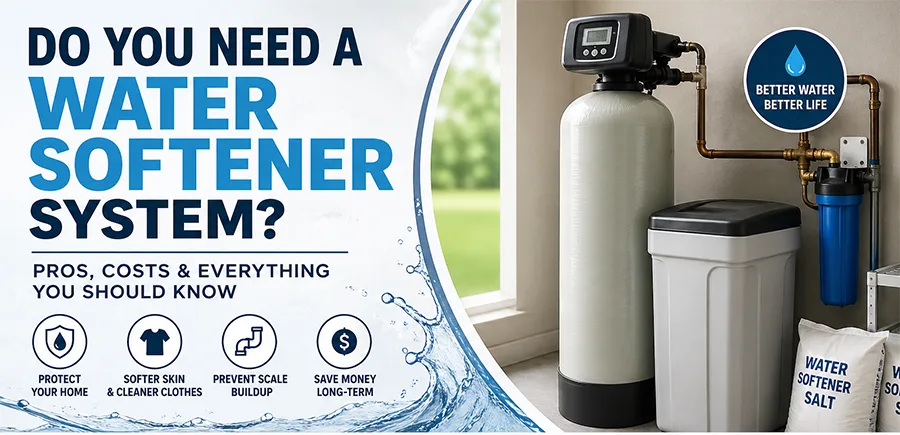
White buildup, dry skin, and appliances that die early are all signs of hard water, here’s what a softener actually costs in 2026 and how to know if you need one.
White buildup, dry skin, and appliances that die early are all signs of hard water here’s what a softener actually costs in 2026 and how to know if you need one.
A whole-home water softener typically costs $1,500 to $4,000 installed for a salt-based system, or $1,500 to $4,500 for a salt-free conditioner. San Antonio’s water supply runs high in calcium and magnesium, so most homes here see hard water symptoms white buildup on fixtures, dry skin, appliances wearing out early well before the national average homeowner does.
A water softener removes calcium and magnesium from your water supply through a process called ion exchange, swapping those minerals for sodium or potassium so the water reaching your pipes and fixtures is “soft.” Salt-free conditioners take a different approach, treating the minerals chemically so they don’t stick and form scale, but without removing them outright. Either way, the goal is the same: stop hard water from quietly wearing down everything it touches.
Signs You’re Dealing With Hard Water
| What You’re Seeing | What It Means |
|---|---|
| White buildup on faucets and showerheads | Mineral deposits accumulating on fixtures |
| Spots on dishes and glassware | Mineral residue left behind after washing |
| Soap that won’t lather well | Minerals interfering with soap’s ability to foam |
| Dry skin or brittle hair after showers | Water lacking the softness to rinse cleanly |
| Water pressure dropping over time | Scale buildup narrowing pipe interiors |
| Appliances wearing out earlier than expected | Mineral buildup straining water heaters, washers, dishwashers |
Most San Antonio homeowners notice the symptoms long before they think to test the water itself. If two or more of these sound familiar, it’s worth getting your water hardness checked rather than just treating each symptom separately.
Water Softener Cost in 2026
| System Type | Typical Installed Cost | Annual Operating Cost |
|---|---|---|
| Salt-based (ion exchange) | $1,500 – $4,000 | $100 – $300 |
| Salt-free (conditioner) | $1,500 – $4,500 | $60 – $120 |
These are 2026 market-typical ranges, not Silverback’s fixed pricing. Exact cost depends on your home’s water usage, the system’s grain capacity, and installation complexity we provide a written estimate sized to your actual household.
Salt-based systems cost less to install on average but carry ongoing salt and maintenance costs. Salt-free systems often cost more upfront but run cheaper year to year. Over a 10-year span the two approaches frequently land in a similar total range the better fit usually comes down to whether you’d rather pay more now or a little more in upkeep over time, plus whether you want the minerals actually removed (salt-based) or just neutralized (salt-free).
Already Have a System? Repair vs. Replace
| Situation | Best Option |
|---|---|
| System under 5–7 years old | Repair |
| Hard water symptoms returning | Inspection first |
| System over 8–10 years old | Replace |
| Frequent breakdowns or declining efficiency | Replace |
An older system that’s still working but losing efficiency is worth inspecting before assuming it needs replacement sometimes a resin bed cleaning or a settings adjustment solves the problem for far less than a new unit.
Why This Matters More in San Antonio
San Antonio’s municipal water supply runs high in calcium and magnesium compared to most of the country, which is why hard water problems here tend to show up sooner and more severely than the national averages above might suggest. We’ve also covered how that same hard water shortens the life of water heaters specifically a softener protects both your fixtures and any tank or tankless unit you already have installed.
Frequently Asked Questions About Water Softener Cost
Is salt-based or salt-free better for San Antonio’s water?
Salt-based systems actually remove calcium and magnesium and tend to perform better against very hard water, which is common here. Salt-free conditioners work well for moderately hard water and require less maintenance, but don’t fully remove the minerals.
What size water softener does my home need?
Sizing is based on household size and water hardness, typically measured in grain capacity. A 1–2 person home often needs around 32,000 grains, a 3–4 person home around 48,000, and larger households 64,000 or more. A plumber can size this accurately based on a water hardness test rather than a guess.
Can I rent a water softener instead of buying one?
Rental programs exist, but they typically cost more over a 5+ year period than purchasing and installing a system outright, since you’re paying ongoing rental fees on top of service. Buying tends to be the better value if you plan to stay in the home long-term.
How long does water softener installation take?
A standard whole-home installation usually takes 2 to 4 hours for a straightforward setup. It can run longer if new plumbing connections or electrical work are needed for the system’s location.
Will a water softener fix low water pressure?
It can help if the low pressure is caused by scale buildup narrowing your pipes, since a softener stops new scale from forming. It won’t restore pressure lost to other causes, like a municipal supply issue or existing pipe damage, so it’s worth confirming the cause first.
Fix Hard Water Before It Costs You More
Hard water doesn’t resolve on its own, and every year it goes untreated adds wear to your pipes, fixtures, and appliances that a softener would have prevented. If you’re seeing the warning signs above, our water softener installation and repair page has more detail on how we size and install systems for San Antonio homes.
Get a Free Water Softener Estimate
Tell us about your water and your household, and we’ll recommend the right system size and type — with a real installed price, not a guess.