
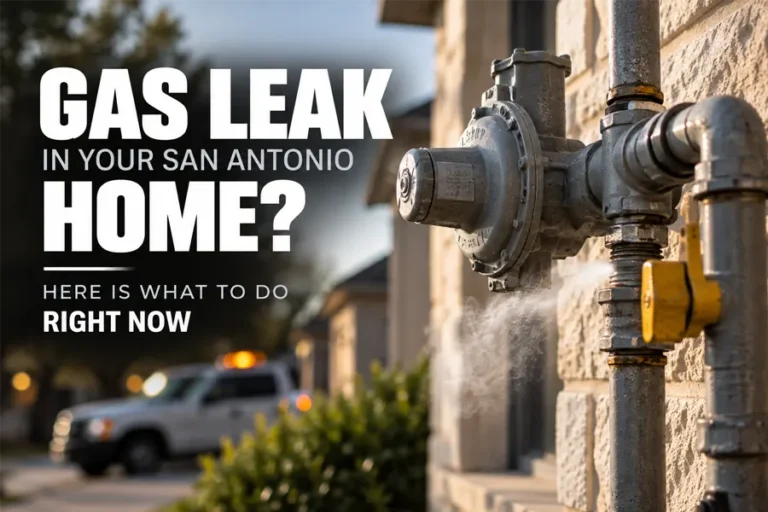
Gas Leak in Your San Antonio Home? Here Is What to Do Right Now
Get out, leave the door open, touch nothing electrical, and call 911 and CPS Energy at 210-353-HELP from somewhere else. Everything else can wait.
License: RMP-43333

From suspected leaks to new gas line installation, we diagnose the issue on-site and fix it to code — because with gas, "close enough" isn't good enough.
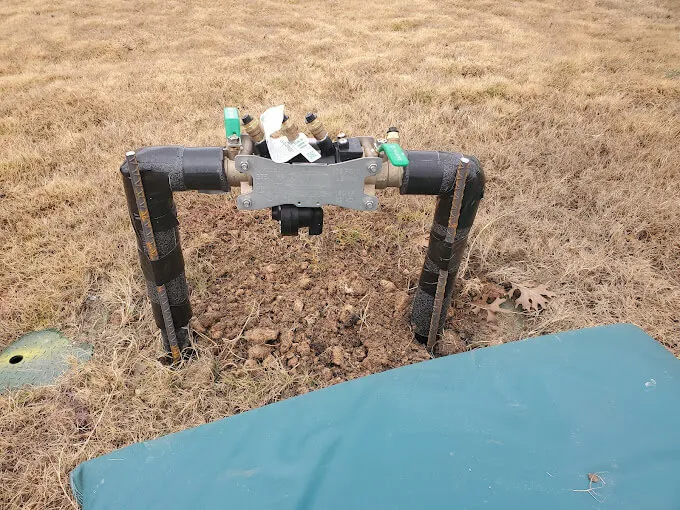
A gas line problem isn’t like a slow drain — it doesn’t wait for a convenient time, and it isn’t something to guess at. Silverback Plumbing & Drain installs, repairs, and replaces gas lines for San Antonio homes, from a single corroded fitting under the kitchen to a full new line run for a fireplace, generator, or outdoor kitchen.
If you smell gas right now, stop reading and act:
This isn’t overly cautious — it’s exactly what the CPS Energy natural gas safety guidance tells San Antonio residents to do, and it’s the right call every time.
A sulfur or rotten-egg smell, hissing near a pipe, or dead patches of grass over a buried line.
A stove, water heater, or furnace that won’t light, or a pilot that keeps going out.
Appliances running weak, taking longer to heat, or struggling to maintain a flame.
Older black iron or steel lines that have rusted through or no longer meet code.
A line nicked or severed during landscaping, fencing, or yard construction.
Adding a gas fireplace, outdoor grill, generator, or upgrading an electric appliance to gas.
| Service | What It Covers |
|---|---|
| Leak detection & repair | Locating and sealing leaks at fittings, joints, or pipe walls |
| New line installation | Running new gas supply for an appliance, fireplace, or addition |
| Line replacement | Replacing corroded, undersized, or out-of-code piping |
| Appliance connections | Hooking up water heaters, ranges, dryers, and fireplaces to existing lines |
| Code compliance inspection | Checking existing lines against current fuel gas code before a sale, renovation, or appliance swap |
A small gas line issue doesn’t stay small. A pinhole leak at a fitting can widen as the pipe continues to corrode, and a line that’s slowly losing pressure puts more strain on every appliance connected to it shortening their lifespan and, in the case of a water heater or furnace, raising the risk of incomplete combustion. Left unaddressed long enough, a leak in an enclosed space becomes a fire and explosion hazard, which is exactly why we treat any suspected leak as same-day, not next-available-appointment, work.
| What You’re Noticing | What It Usually Means |
|---|---|
| Rotten-egg or sulfur smell indoors or in the yard | A gas leak — treat as urgent every time |
| Hissing sound near a pipe or appliance connection | Gas escaping under pressure at a fitting or crack |
| A patch of dead, discolored grass over a buried line | Possible underground leak affecting root systems |
| Pilot lights that won’t stay lit | Low gas pressure or a partially blocked line |
| Higher gas bills with no change in usage | A slow leak or an inefficient older appliance connection |
Not every gas line issue calls for the same fix:
| Situation | Best Option |
|---|---|
| Adding a new gas appliance or fixture | New line installation, sized for that appliance’s demand |
| One leak or damaged section on an otherwise sound line | Targeted repair |
| Older black iron piping showing rust or scale | Replacement of the affected run |
| Line fails a code compliance inspection | Replacement to current fuel gas code |
| Multiple recurring leaks across the system | Full replacement rather than repeated patch repairs |
Gas line work connects directly to appliances like your water heater and gas fireplace — if either of those is acting up at the same time as a suspected line issue, mention it when you call so we can check the whole system in one visit instead of two.
We pressure-test the line to locate any leak precisely
We explain what we found and what it’ll take to fix it
We complete the repair, replacement, or new installation
We re-test the system before we consider the job done
Most repairs and appliance connections are finished same-day. New line installations or full replacements may take longer depending on the run length and whether drywall, flooring, or yard work is involved — we’ll tell you which applies before we start.
Any active gas smell, hissing sound, or suspected leak is an emergency — full stop, regardless of the time of day. If you’re instead dealing with an appliance that simply won’t light and there’s no gas odor, that’s still worth a same-day call but isn’t the leave-the-house situation described above. If you’re also dealing with flooding, a burst pipe, or no water alongside a gas concern, our 24/7 emergency plumbing line covers both at once.
We don’t ask for five stars, we earn them by showing up, fixing it right, and telling you the cost before we start.
Here’s what real customers across San Antonio have to say.
Posted on Google
 Xochitl GarciaJune 24, 2026
Trustindex verifies that the original source of the review is Google.
Service itself for the work was good, they communicated thoroughly and effectively, any issues i had they worked on resolving them. Would turn to them for any plumbing and draining needs. They are reliable and honest.Posted on Google Lisa PenaJune 21, 2026I was very happy with the job that David and Brendan from Silverback Plumbing & Drain performed on my toilet. They were able to come out to my house within a day of my phone call, which was wonderful. They replaced the seal in my toilet tank quickly and showed me how my old seal had bumps on it (causing it not to seal properly anymore). Additionally, they fixed the chain that connected to the handle for free after I explained that sometimes the handle doesn’t flush properly. I also was satisfied with the price that I was charged for replacing the seal in my tank. David informed me that I should contact SAWS to let them know that I had the seal in my tank repaired in order to possibly get them to reimburse me some money (if the most recent bill that I had was higher than my previous bills). David and Brendan were very knowledgeable, professional, and personable. If you need to have a plumbing job done, don’t hesitate to use Silverback Plumbing & Drain!Posted on Google
 Leslee BrandtJune 19, 2026Great communication with quality work. Definitely recommend them!Posted on Google
 Jennifer EbingerJune 16, 2026We had a great experience with Silverback Plumbing! Brian and Brendon recently replaced our water heater and repaired a leaky tub faucet, and they did an outstanding job from start to finish. Both of them were professional, friendly, and took the time to explain everything clearly before and after the work was completed. They arrived on time, worked efficiently, and left the area spotless when they were finished. It's refreshing to work with technicians who truly care about the quality of their work and customer service. Silverback Plumbing has earned our trust with their reliability, honesty, and excellent workmanship. We highly recommend Silverback Plumbing, and a special thank you to Brian and Brendon for providing such exceptional service. We will definitely call them again for any future plumbing needs!Posted on Google
 Shane BeckJune 2, 2026Team was great!Posted on Google
 Jessica Ann Figueroa-JoubertMay 22, 2026Mario came and resolved our problem, thank you.Posted on Google
 Johnny VillanuevaMay 19, 2026Great work took pictures and provided a detailed report which was exactly what I needed
Natural gas is naturally odorless, so utilities add a chemical called mercaptan that smells like sulfur or rotten eggs specifically so leaks are noticeable. If you smell that anywhere in or around your home, treat it as a leak and leave immediately.
No. There’s no “safe” amount of gas odor to wait out. Leave the house, avoid anything that could create a spark, and call CPS Energy’s emergency line or 911 from a safe distance before calling us.
Code sets a 12-inch minimum on private property and 18 inches under driveways or areas vehicles cross. We often install deeper here because San Antonio’s clay soil shifts seasonally, and a little extra depth holds up better over time than the bare minimum.
No. Gas line work in Texas requires a licensed plumber, and for good reason — an improperly sealed fitting or undersized line isn’t something you find out about until it’s already a hazard. Permits and inspections also apply to most gas line work.
Cost depends on whether it’s a single fitting repair, a longer section replacement, or a new line installation, plus how accessible the line is. We diagnose the specific issue first and give you a clear price before any work begins.
Yes. We size and run new gas lines for outdoor appliances, fire features, and standby generators, including the permitting and inspection that goes with adding a new line to your system.
Get out, leave the door open, touch nothing electrical, and call 911 and CPS Energy at 210-353-HELP from somewhere else. Everything else can wait.
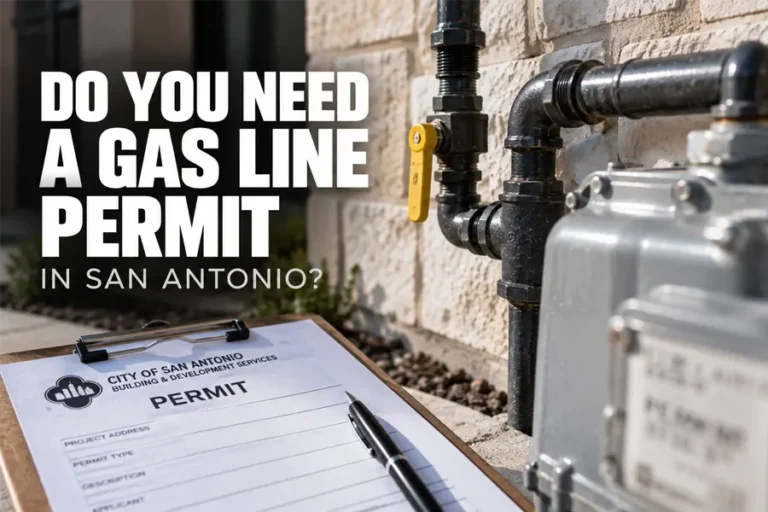
No permit means no gas, not a fine in the mail. CPS Energy will install your meter and leave it locked until the city inspections come through.
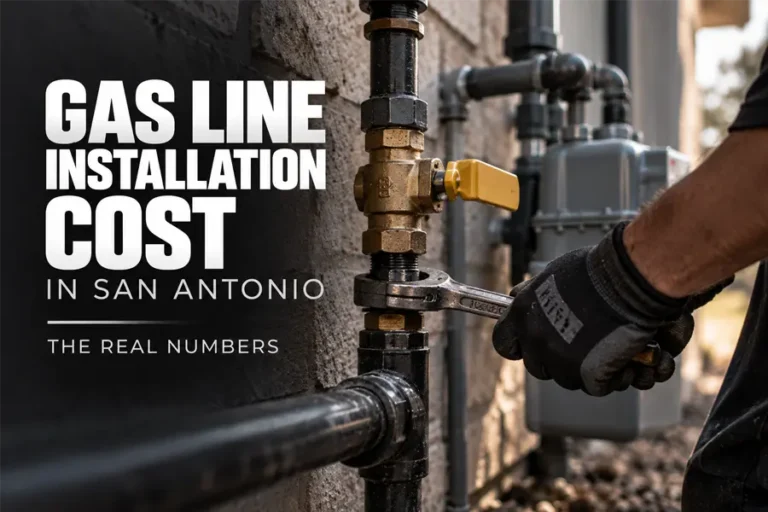
Per-foot ranges, the three projects this city actually asks for, and the meter-capacity problem that explains why your neighbor’s generator quote was half of yours.