
A disposal that hums but won’t spin, leaks onto the cabinet floor, or trips the breaker every time you run it isn’t something to live with for another week. Silverback Plumbing & Drain repairs and replaces garbage disposals for San Antonio kitchens, and we’ll tell you honestly when a $15 part fixes it versus when the unit has reached the end of its life.
Common Garbage Disposal Problems We Fix
Most service calls fall into one of these categories:
Jammed or Stuck
The unit hums but the blades won’t turn, usually from something lodged between the impellers.
Leaking Under the Sink
Water pooling in the cabinet, usually from a worn seal, loose mounting, or a cracked housing.
Won’t Turn On
Dead silence when you flip the switch, often a tripped reset button or failed motor.
Loud Grinding Noise
Metal-on-metal sounds pointing to a worn-out flywheel or something hard caught inside.
Tripping the Breaker
A motor drawing too much current, often from a jam or a failing capacitor.
Persistent Odors
Trapped food debris breaking down inside the unit long after it’s run.
Garbage Disposal Services We Provide
| Service | What It Covers |
|---|---|
| Jam clearing | Safely removing what’s lodged in the unit and resetting it |
| Leak repair | Replacing worn seals, gaskets, or tightening mounting hardware |
| Electrical diagnosis | Checking the switch, reset button, capacitor, and wiring |
| Full replacement | Removing a failed unit and installing a properly sized new one |
| New installation | Adding a disposal where one didn’t exist before |
Repair or Replace? Here’s How to Decide
Disposals typically last 8 to 12 years, and whether yours is worth fixing usually comes down to age and what’s actually wrong:| Situation | Best Option |
|---|---|
| Unit is under 5 years old with a jam or minor issue | Repair |
| Leak from a loose mount or worn seal | Repair |
| Motor hums but won’t turn, repeatedly | Inspect first, then repair if the motor checks out |
| Unit is over 8–10 years old with a failed motor | Replacement |
| Leaking from a cracked housing | Replacement — housings can’t be sealed permanently |
| Frequent breaker trips despite repairs | Replacement |
How to Safely Reset a Disposal That Won’t Turn On
Before assuming the motor is dead, it’s worth trying a reset — most “no power” calls turn out to be this simple:
Turn off the wall switch and unplug or cut power at the breaker
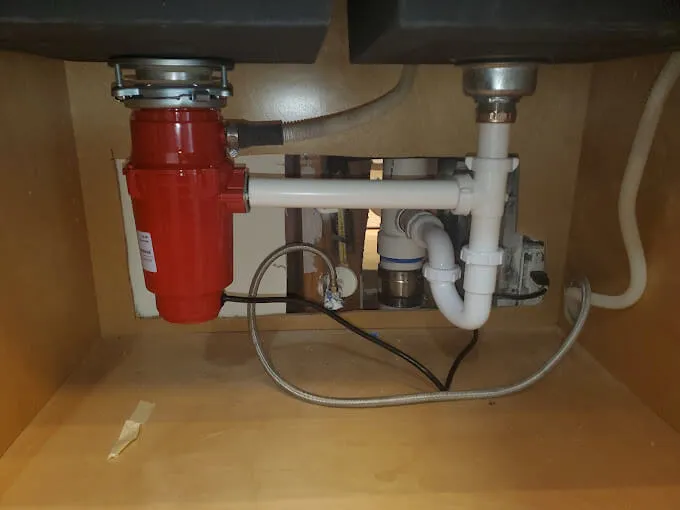
Look underneath the unit for a small red reset button
Press it firmly until you feel or hear it click
Restore power and test — if it trips again, stop and call us
A disposal that trips its reset button once isn’t a big deal. One that trips repeatedly is telling you something — usually a jam putting strain on the motor or a failing capacitor — and resetting it over and over without addressing the cause is a good way to burn out the motor for good.
What Goes Down a Disposal (and What Never Should)
Most “broken” disposals aren’t actually broken — they’re jammed or strained by something that shouldn’t have gone down in the first place:
| Generally Fine | Avoid |
|---|---|
| Small food scraps, soft fruit and vegetable bits | Grease, fat, and cooking oil — they coat the blades and the pipe |
| Ice cubes (occasionally, to clean the blades) | Fibrous vegetables like celery, corn husks, and onion skins |
| Citrus peels in small amounts | Bones, pits, and fruit cores |
| Cold running water while in use | Pasta, rice, or anything that expands with water |
SAWS attributes roughly 28% of sanitary sewer overflows citywide to grease buildup in the system — a major reason grease should go in the trash, not down any drain or disposal. See the SAWS Fats, Oils & Grease program for details.
Signs Your Gas Line Needs a Professional Look
| What You’re Noticing | What It Usually Means |
|---|---|
| Rotten-egg or sulfur smell indoors or in the yard | A gas leak — treat as urgent every time |
| Hissing sound near a pipe or appliance connection | Gas escaping under pressure at a fitting or crack |
| A patch of dead, discolored grass over a buried line | Possible underground leak affecting root systems |
| Pilot lights that won’t stay lit | Low gas pressure or a partially blocked line |
| Higher gas bills with no change in usage | A slow leak or an inefficient older appliance connection |
If Your Home Is on a Septic System
Several communities we serve outside the city core — parts of Helotes, Bulverde, and Somerset among them — rely on septic systems rather than the municipal sewer. Garbage disposals add extra solids to a septic tank, which can mean more frequent pumping and, over time, more strain on the drain field. If you’re on septic and want a disposal anyway, we can talk through septic-rated units and usage habits that keep the added load manageable. For general septic system guidance, the EPA’s septic systems resource is a solid reference. If you’re unsure whether your home is on septic or city sewer, that’s something we can confirm during the same visit — and if it turns out to be a larger sewer line question, our sewer line team can take it from there.
When a Disposal Problem Becomes a Bigger Plumbing Issue
Call sooner rather than later if you notice:
- Standing water in the cabinet under the sink — it can damage cabinetry and flooring fast
- A leak anywhere near an electrical outlet or the disposal’s wiring
- The sink draining slowly in addition to disposal trouble — that can point to a clog further down the line
- A burning smell when the unit runs
If slow drainage is showing up elsewhere in the kitchen too, it’s worth having the line checked along with the disposal — our drain cleaning service covers that in the same visit.
What to Expect During Installation
We remove the old unit and inspect the connections
We size the new disposal to your household’s usage
We secure the plumbing and electrical connections
We run and test it before calling the job finished
Most installations and replacements are completed in a single visit, usually under two hours, with no permanent changes to your existing sink or cabinetry.


