

A slab leak is a break in a water or drain line running beneath the concrete foundation, and in San Antonio it is a category of its own rather than a rare event. The ground under most of this city is expansive clay that swells through a wet spring and shrinks through a dry August, and the pipework cast into the slab above it moves whether it was designed to or not. Silverback Plumbing and Drain locates slab leaks electronically, proves which line has failed before anything is opened, and prices every viable repair route rather than the one that suits us.
San Antonio sits on highly expansive clay soil. Seasonal swelling and shrinking is the leading cause of slab leaks here, which is why houses from the 1970s and houses from 2005 both turn up on the list.
How a slab leak announces itself
-
A warm patch on the floor
The clearest single sign there is. A hot line leaking under the slab heats the concrete above it, and you feel it barefoot before you see anything else.
-
Running water with everything off
Stand in a quiet house with every tap closed. A faint continuous rush that does not stop is water moving where it should not be.
-
A bill that climbed and stayed climbed
Not a one-month spike. A slab leak runs continuously, so the increase repeats every cycle and gets slightly worse.
-
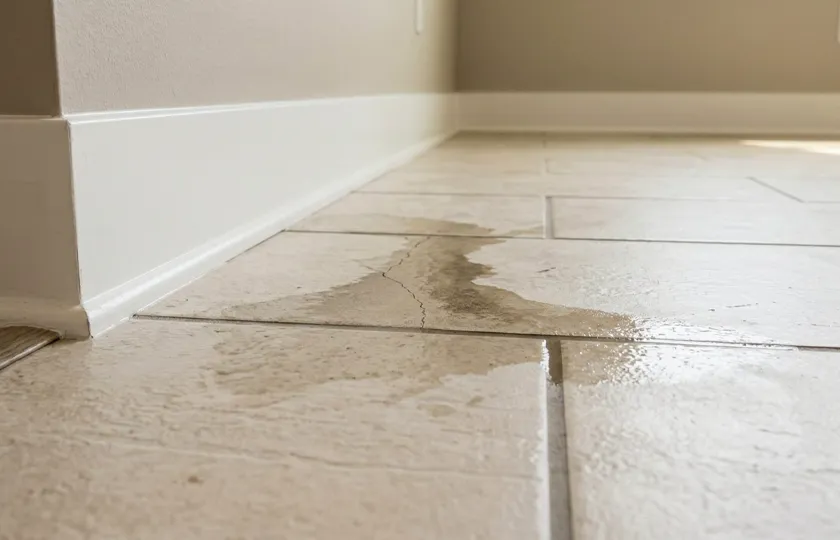
Flooring lifting or staying damp
Wood cupping, tile going hollow underfoot, or carpet that holds damp in one spot with nothing above it to explain the damp.
-
A musty smell that will not clear
Moisture under flooring feeds mould you cannot see. The smell arrives long before anything visible does.
-
A water heater that never rests
On a hot-side slab leak the heater is reheating water that is leaving the house through the ground, so it cycles far more than the household explains.
Freshwater or sewer: two different leaks, two different repairs
Everything under the slab falls into one of two systems, and which one has failed changes the symptoms, the test that proves it and the money.
| Pressurised water line | Drain or sewer line | |
|---|---|---|
| What it carries | Supply under constant pressure, hot or cold | Waste flowing by gravity, no pressure behind it |
| How it shows | Warm floor, running-water sound, rising bill | Sewage odour, damp with no bill change, floor movement |
| Proving it | Meter isolation and a pressure test on the supply | Hydrostatic test, then a camera down the line |
| Speed of damage | Fast. A pressurised slab leak moves a lot of water | Slow, and worse. It washes soil out from under the foundation |
| Usual repair | Reroute overhead, or open the floor at one point | Tunnel and replace, or line the pipe in place |
The sewer-side slab leak is the one people underestimate. There is no bill to warn you and no sound to hear, and the water leaving a broken drain carries soil with it. That is what turns a pipe repair into a foundation conversation, and it is the reason we do not leave a suspected drain fault undiagnosed.
Why slabs leak here rather than everywhere
Three things stack up in San Antonio and each one on its own would be enough.
The soil comes first. Expansive clay changes volume with moisture, so the slab is being lifted and dropped through the year by a few millimetres at a time. Copper cast into concrete has nowhere to go when that happens, and a line that is bearing against aggregate wears through at the contact point. This is why a slab leak so often follows a long drought or the first heavy rain after one.
Then the water itself. At 15 to 20 grains per gallon, San Antonio water is hard enough to scale the inside of a supply line and, in combination with the soil chemistry outside it, to pit copper from both directions at once. Pinhole failures in under-slab copper are routine here and unusual in softer-water cities.
Last, the era. A great many houses built between the 1960s and the late 1980s have copper supply run under the slab with no sleeve. That construction is now at an age where a single slab leak is rarely the last one, which is the fact that decides whether you repair a spot or reroute the run.

Three things that imitate a slab leak
Before anyone talks about concrete, the cheap explanations get eliminated, because a fair number of calls end here and cost the homeowner almost nothing.
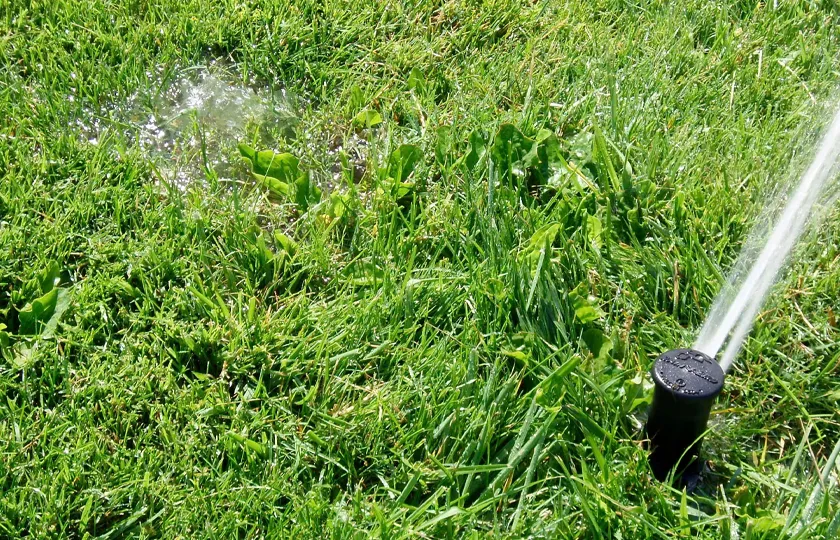
An irrigation line is the first. A cracked lateral or a valve weeping after the zone shuts holds ground wet and runs the meter continuously, and it reads exactly like a slab leak until the irrigation system is isolated. It is also the least expensive of all the answers.
An air conditioning condensate line is the second. In a San Antonio summer a unit produces a surprising volume of water, and a blocked or disconnected condensate line puts it into a wall cavity or under flooring. The damp is real, the bill never moves, and the fix is not a plumbing excavation.
A water heater relief valve is the third. A temperature and pressure valve discharging intermittently sends water to a drain or a pan and sounds, from another room, like water moving with nothing running. It points at pressure in the system rather than at a slab leak, and it is a component replacement.
The meter isolation test at the start of the visit separates all three from a genuine slab leak in about twenty minutes, which is why it comes before anything else we do.
How the leak gets located before anything is opened
Nothing is cut on a guess. The sequence below is what separates a repair at one point from an exploratory hole in a living room floor.
- We isolate the house at the meter and watch it. Movement with every fixture closed proves water is escaping and separates a slab leak from a yard leak before anyone comes inside.
- The supply is pressure tested, hot and cold separately, so we know which of the two systems is losing and can stop treating the other as a suspect.
- Where the drain system is in question, a hydrostatic test isolates the under-slab waste lines and holds them under a water column. A level that falls is proof, and it is the test insurers and foundation engineers ask for by name.
- Acoustic listening equipment follows the escaping water through the concrete. Under pressure a slab leak makes a specific sound, and the equipment narrows it to a small area.
- Thermal imaging confirms a hot-side leak by the heat signature it leaves in the slab, and tracer gas is used where the acoustic picture is ambiguous or the leak is too small to hear.
- On the drain side a camera goes down the line with a sonde, so the fault is located and its depth marked rather than estimated.
What you get at the end is a marked spot, a depth, and a written account of which line failed and how it was proved. That is what a second opinion needs, and it is yours whether or not we do the repair.
Four ways a slab leak gets repaired
Once the fault is located there is rarely one answer. We price the routes that genuinely apply to your house and say which we would take.
| Method | What it involves | When it is the right call |
|---|---|---|
| Spot repair through the floor | Flooring lifted, slab cut at the marked point, pipe section replaced, concrete restored | A single accessible fault on otherwise sound pipework |
| Tunnel under the slab | Access dug from outside and worked back beneath the foundation, floor untouched | Drain repairs, and anywhere the finished floor cannot be disturbed |
| Reroute overhead | The failed run abandoned in place and replaced through walls and attic | Ageing under-slab copper where a second slab leak is a question of when |
| Line the pipe in place | A cured liner installed inside the existing drain, forming a new pipe within the old one | Sewer lines that are sound in shape but leaking at joints |
The honest trade-off is between today and the next ten years. A spot repair is the smaller number and it fixes the fault in front of us. A reroute costs more and takes the whole run out of the slab, so the question stops recurring. Where the house is at the age when the pipe is simply finished, we will say so rather than sell you the same repair twice.
What moves the price on a slab leak
We are not going to print a range we would then have to argue with on site. These are the things that actually decide the number, and we will tell you which apply to your house before work starts.
| Factor | Why it matters |
|---|---|
| Depth of the slab and the pipe | Deeper lines mean more excavation and more time, whether the access is through the floor or from outside |
| Supply or drain | A pressurised line can often be rerouted overhead; a drain generally has to be reached where it lies |
| What is above it | A slab leak under a tiled kitchen island is a different job from one under a spare bedroom carpet |
| One fault or a failing run | A spot repair on a line that will fail again is the expensive option measured over five years |
| Access from outside | Tunnelling needs a working route in. Patios, drives and mature planting all change the approach |
| Restoration | Concrete goes back with us. Flooring, tile and cabinetry are priced separately and said out loud first |

What your insurer will and will not look at
Most Texas homeowner policies treat sudden and accidental water damage as covered and the failed pipe itself as not covered. In practice that means the tear-out, the drying and the damaged flooring are often claimable while the plumbing repair is yours, though policies vary and we are not the ones who decide.
What decides claims is evidence, and evidence has to be gathered before the repair. Photograph the damage before anything is moved, keep the section of pipe that failed, and make sure the date the slab leak was found is written down. A pinholed length of copper is physical proof of a sudden failure rather than years of seepage, and that distinction is frequently the entire argument.
Every slab leak we locate comes with a written report — which line, where, how it was proved and on what date — in the form an adjuster expects to receive. Ask for it on the day.
What waiting actually costs
A slab leak does not settle down and it does not repair itself. These are the points at which the job gets materially more expensive, in the order they tend to arrive.
- Flooring: wood cups and delaminates, and tile debonds from a damp slab.
- Mould behind skirting and under cabinets, which brings a remediation trade into a plumbing job.
- Soil washout beneath the foundation from a leaking drain, which is where slab movement starts.
- Water bills that carry on compounding every cycle the leak runs.
- A claim an insurer can argue is long-term seepage rather than a sudden failure.
None of that is a scare tactic and none of it is fast. It is simply the order things happen in, and it is why locating a suspected slab leak is worth doing the week you suspect it rather than the season after.
Slab leak detection across San Antonio and the Hill Country
We cover San Antonio and out through Helotes, Boerne, Bulverde, Schertz, Converse, Stone Oak, Alamo Ranch and Somerset. Slab construction is close to universal across that spread, and so is the clay underneath it, so this is steady work rather than an occasional call.
If the water is running now, close the main and call. If it is a suspicion rather than an emergency, a location visit is usually available the same week, and a hydrostatic test is the quickest way to settle whether the drain side is involved.
Work is carried out by licensed plumbers under our Responsible Master Plumber, license RMP-43333, issued by the Texas State Board of Plumbing Examiners. You can verify that license yourself.
What San Antonio homeowners say
Reviews pulled live from our Google Business Profile, not retyped here.


Frequently asked questions
What does a slab leak feel like underfoot?
A warm or hot patch on the floor with nothing above it to explain the warmth is the classic sign of a hot-side slab leak. A cold-line leak gives you no temperature clue at all, which is why the sound test and the meter test matter more than the floor does.
Can you find it without breaking the floor?
Yes, and that is the whole point of the location visit. Meter isolation, pressure testing, acoustic listening, thermal imaging and tracer gas narrow a slab leak to a small marked area before any concrete is touched. Cutting comes after the answer, not to find it.
How much of the floor has to come up?
For a spot repair, an area of roughly a metre square at the marked point. For a reroute, none of it — the failed line is abandoned in place and new pipe runs through walls and attic. For a drain repair, often none either, because the access is tunnelled from outside.
Will my insurance cover a slab leak?
Policies commonly cover the resulting damage and exclude the pipe repair itself, but they vary and your insurer decides. What helps either way is documentation made before the repair: photographs, the date, and the failed section of pipe kept as evidence of a sudden failure.
Is a hydrostatic test the same as leak detection?
No. A hydrostatic test proves whether the under-slab drain system holds water. It tells you there is a fault and which system it is in; it does not tell you where. Locating comes after, with a camera and a sonde.
How long does the repair take?
A located spot repair on a supply line is usually a day. A reroute is one to three days depending on the run. A tunnelled drain repair depends on the distance to the fault and the ground, and we give you that estimate once the leak is located rather than before.
My house is new. Can it still have a slab leak?
Yes. The soil does not care how old the house is, and construction damage — a line nicked during the pour or bearing hard against aggregate — shows up in the first few years rather than the last. Newer builds turn up on our list regularly.
Should I shut the water off while I wait?
If you can hear it running, yes, between uses, and we will show you the valve when we arrive. If it is a slow slab leak with no audible flow, normal use for a day or two is fine.
Do you repair the floor afterwards?
We put the concrete back. Flooring, tile and cabinetry are specialist trades and we price them separately or hand you to somebody who does that work properly — we would rather be honest about it than approximate a tile match.
What if the leak turns out to be in the yard instead?
Then it is a yard leak, not a slab leak, and it is cheaper. The meter isolation at the start of the visit separates the two before anybody comes inside, which is exactly why that step is first.
Is it worth rerouting instead of repairing?
On copper under a slab that is forty years old and has already leaked once, generally yes. On a single fault in otherwise sound pipework, generally no. We will give you both numbers and the reasoning rather than only the one we would rather sell.
Do you offer a warranty on slab leak work?
Yes. Our workmanship carries a five-year warranty, and the location report and any camera footage stay with you regardless of who carries out the repair.
Find the slab leak before it finds your flooring.
We locate it electronically, prove which line failed, and price every repair route that genuinely applies to your house.